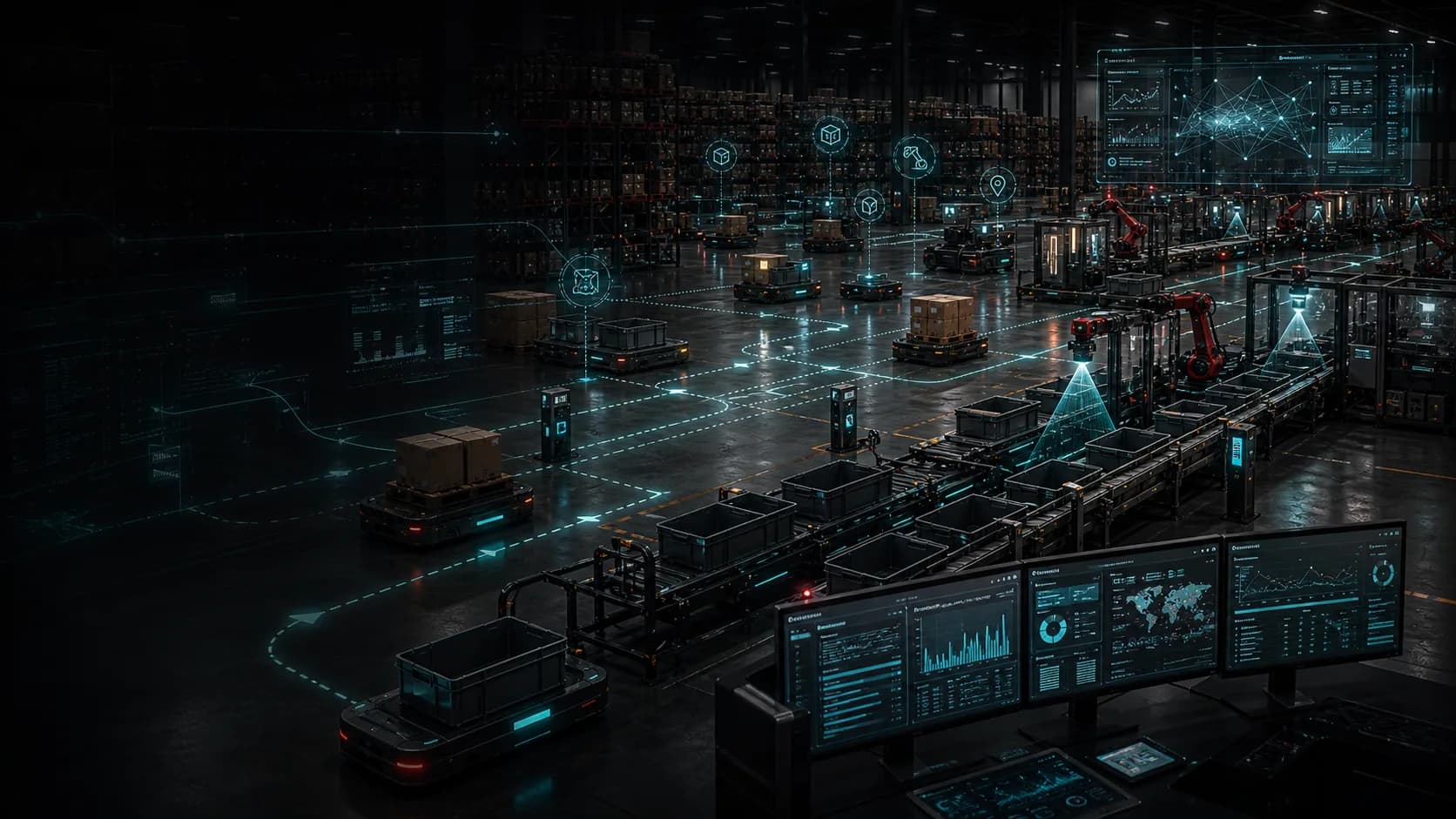
From PLC to Digital Orchestration: The New Software Layer Brought by Mobile Robots


Many factories still rely on PLC-based automation systems for their reliability and robustness. Yet, as mobile robots enter the scene, a new software layer emerges—one that orchestrates tasks dynamically, manages traffic, and coordinates fleets beyond basic machine control.
In today’s factories, PLCs (Programmable Logic Controllers) remain the backbone of automation, prized for their durability, reliability, and the familiarity that field teams have developed over decades. However, industrial automation is evolving rapidly, driven by the emergence of mobile robots that bring new challenges and opportunities.
The Foundation: PLC-Based Automation
PLCs have long been the trusted workhorses of industrial control. Their strengths lie in robust operation in harsh environments, deterministic control of machinery, and well-established integration with sensors and actuators on the factory floor. These advantages have cemented PLCs as a fundamental building block in production lines.
Beyond Machine Control: Enter Mobile Robots
But as manufacturing expands in complexity, simple machine control is no longer enough. Mobile robots introduce a dynamic, flexible element to factory automation. Instead of fixed conveyor belts or stationary machines, these robots navigate diverse environments, perform varied tasks, and cooperate with other systems.
New Coordination Challenges
- Task orchestration: Assigning and sequencing tasks to multiple robots dynamically.
- Traffic management: Avoiding collisions and managing shared spaces efficiently.
- Fleet coordination: Allocating resources and scheduling routes among teams of robots.
- System integration: Linking robot operations with MES, ERP, and other enterprise systems.
The Role of a New Software Layer
While PLCs provide a solid control foundation, the complexity of mobile robot ecosystems requires an additional software layer—one that offers dynamic task management, real-time decision-making, and multi-system orchestration.
“This software layer acts like a conductor in an orchestra, adjusting tempo and cues to keep every instrument in harmony.”
The Skills Gap: More Than PLC Expertise
Factory teams excel at PLC programming and troubleshooting, but mobile robot deployments demand broader expertise:
- Software architecture: Designing scalable, modular systems that can evolve.
- Integration capabilities: Ensuring seamless data flow between robots, PLCs, and enterprise IT.
- Real-time analytics: Monitoring system performance and adjusting workflows on the fly.
Without these capabilities, robot projects risk fragmentation and under-performance.
Choosing the Right Integration Partner
Delivering successful mobile robot projects is about more than sourcing hardware. It requires a partner who understands how to build and deploy the essential software layer that brings everything together.
- Experience with both traditional PLC and modern IT systems.
- Expertise in fleet and traffic management algorithms.
- Ability to customize solutions to unique operational workflows.
Conclusion: Orchestrating the Future of Automation
Mobile robots are reshaping factory floors, transforming rigid automation into adaptive, collaborative environments. Achieving their full potential depends less on the robots themselves and more on the digital architectures orchestrating their operations. For factories aiming at agility and efficiency, investing in this new software layer—and in the right integration partner—is the key to unlocking tomorrow’s industrial performance.