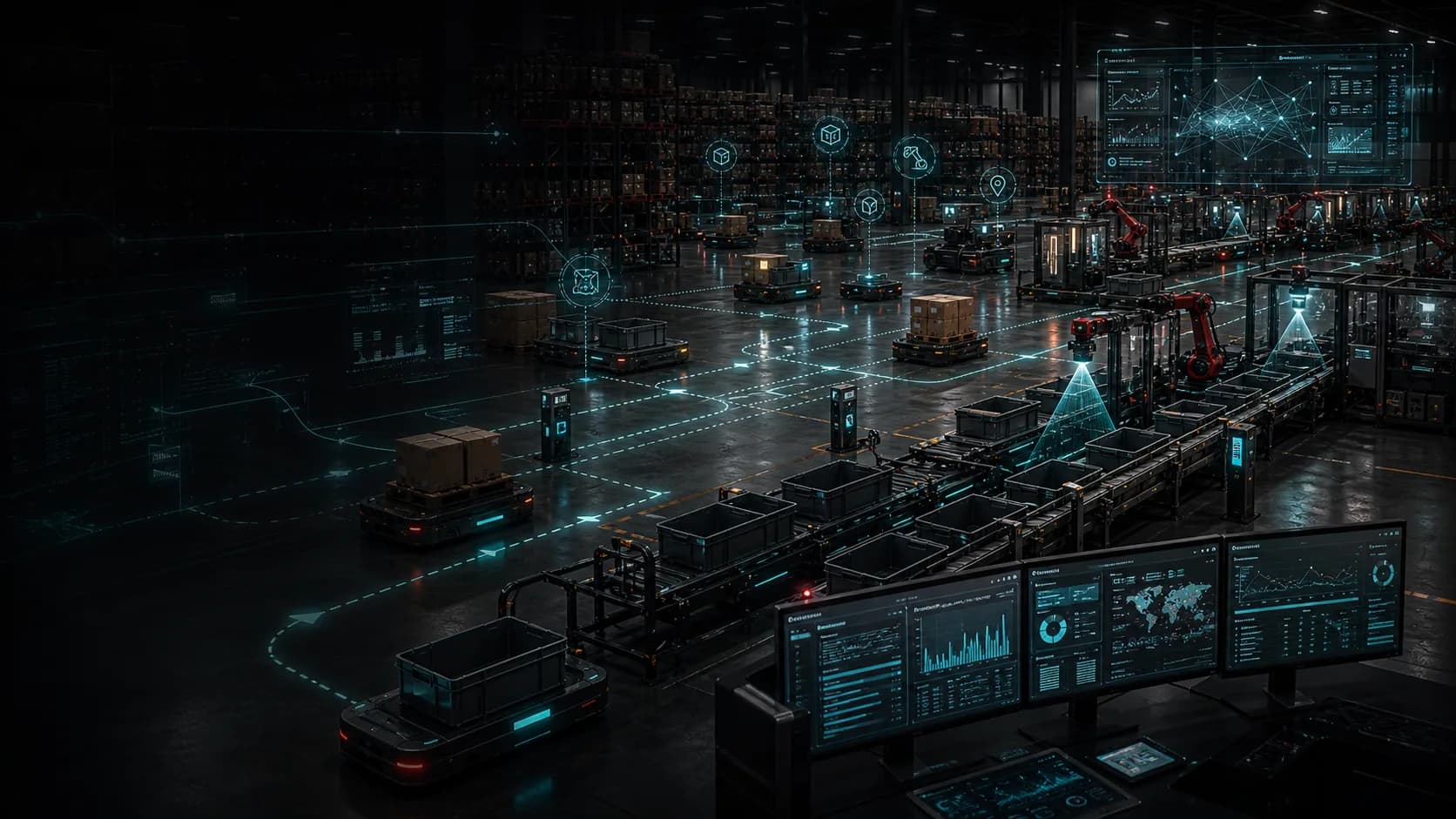
If You See a Robot in the Warehouse, Data Is Actually Moving


Mobile robots in warehouses do more than transport pallets—they drive real-time data flows and decision-making, creating a new strategic layer beyond automation equipment.
At first glance, a mobile robot gliding through a warehouse aisle seems straightforward: a pallet moves from point A to point B, and operations speed up. But beneath this visible action lies a complex orchestration of data, algorithms, and real-time decisions that truly power modern automation.
The Visible Layer: Physical Transport
Most observers focus on what they see—the pallet being carried, the robot navigating paths, and the increase in throughput. Surely, a mobile robot delivers tangible efficiency gains by automating repetitive transport tasks, reducing manual labor and errors.
The Invisible Backbone: Software and Data
However, the real magic happens behind the scenes:
- Task Algorithms: Intelligent scheduling assigns the right task to the right robot at the right time.
- Traffic Management: Algorithms prevent collisions, dynamically reroute robots, and optimize flow in crowded corridors.
- Real-Time Data Integration: Operational data continuously updates ERP systems, MES dashboards, and key performance indicators.
Each movement triggers a cascade of data updates and decision-making processes. The robot’s physical motion is simply the visible symptom of a much larger software ecosystem.
Dynamic Routing: Static vs. Real-Time Optimization
One critical factor distinguishing successful mobile robot deployments is how routes are planned and adapted.
- Static routing relies on pre-defined paths set during system commissioning. It is simpler but often inflexible to real-world disruptions.
- Dynamic routing uses live data—such as congestion, task priorities, and fleet status—to continuously recalibrate paths for optimal efficiency.
The latter approach requires robust IT architecture and real-time processing capabilities, but unlocks significantly higher operational agility.
Fleet Coordination: Intuition vs. Data-Driven Decisions
Managing multiple robots simultaneously is a challenge akin to air traffic control, where every decision impacts overall system performance.
- Seizmatic decisions by operators or static rules can be too rigid or fail to scale as system complexity grows.
- Data-driven coordination leverages analytics and machine learning to predict bottlenecks, allocate resources dynamically, and balance workloads.
Real-Time Reporting: From Lagging Insights to Instant Visibility
Traditional warehouse reporting tends to be retrospective—analyzing the previous day’s or shift’s data. This delays corrective actions.
Modern mobile robot systems enable real-time KPI updates that let managers monitor operations as they happen, adjust strategies on-the-fly, and rapidly identify emerging issues.
Scalability: Growing Beyond Local Constraints
As warehouses expand or workflows evolve, the automation system must be adaptable.
- Localized systems may work well in confined settings but hit limits when scaling fleet size or integrating new operational zones.
- Scalable architectures built on modular software layers and cloud-enabled frameworks support fleet expansion, cross-site coordination, and integration with enterprise IT.
The Strategic Advantage: Software Architecture over Equipment
In the long run, purchasing robots is just the first step in automation. The real strategic breakpoint is the design and implementation of software architectures that connect robot movement to business-critical data streams and decision processes.
"The true competitive edge lies not in the load the robot carries, but in how the data it generates integrates into decision-making processes."
Mobile robot investments must be approached not as isolated equipment purchases, but as architectural decisions shaping how an enterprise mobilizes information and action.
Conclusion
Next time you see a robot silently moving in a warehouse, remember it’s not just transporting goods. It’s carrying a continuous flow of data bursts that keep the entire logistics ecosystem alive and evolving. Embracing this perspective unlocks new horizons of operational efficiency and competitive differentiation.